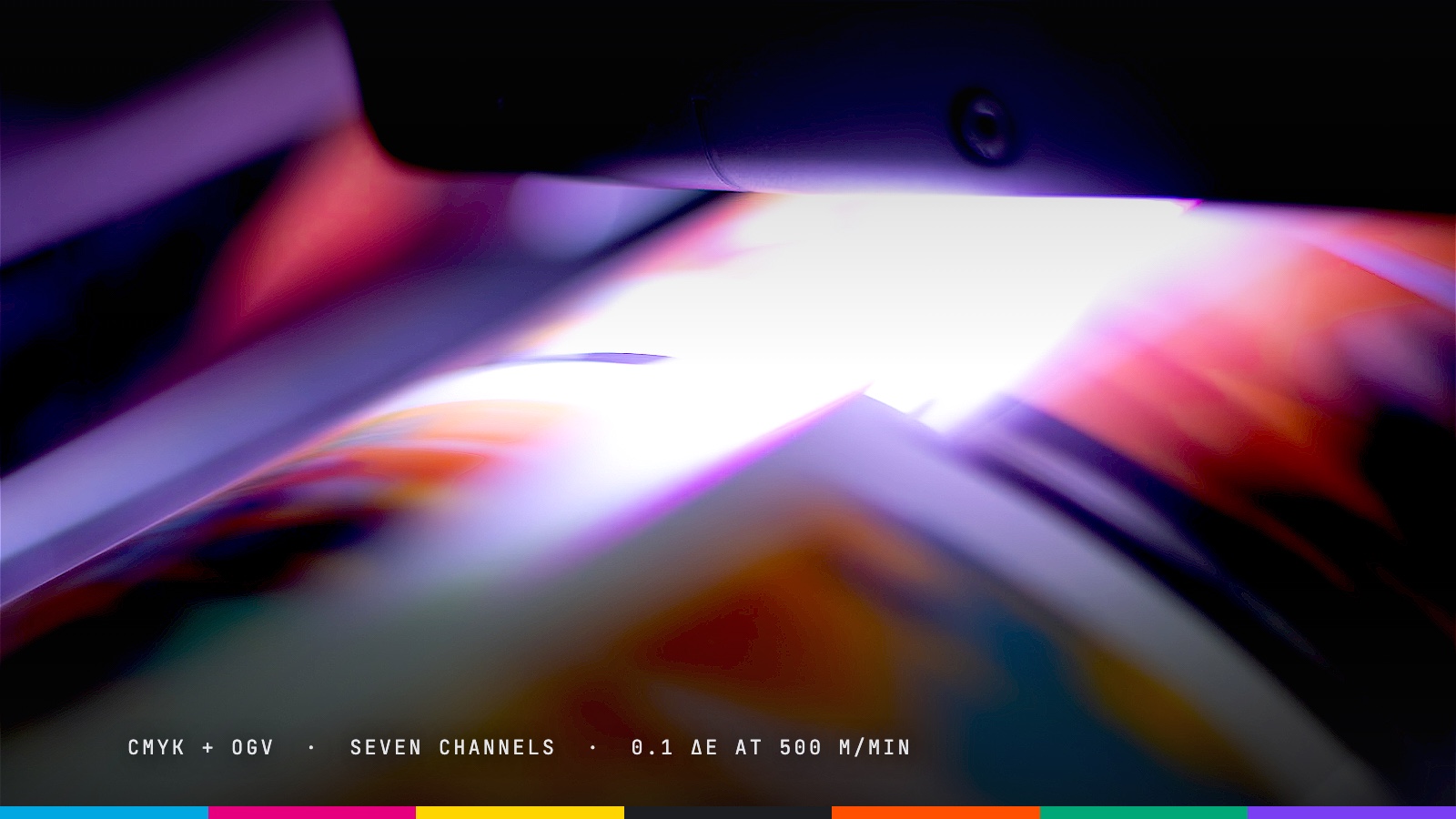
Extended Color Gamut printing has one of the best pitches in the industry: replace the spot-ink carousel with a fixed set — CMYK plus orange, green and violet — and build most brand colors from combinations that never leave the press. Fewer ink changes, shorter makereadies, no drums of one-job Pantone on the shelf. The pitch is real. So is the fine print.
What ECG actually promises
The economics of ECG are changeover economics. Every spot color that becomes a screened combination of the fixed set is a washup that does not happen, a scheduling constraint that disappears, and an ink inventory line that closes. Jobs that share the palette can be ganged; presses stay inked the same way on Monday as on Friday. For a converter running many short jobs with heavy spot-color rotation, the arithmetic is compelling before any quality argument enters the room.
One drift, many colors
Here is the part the gamut charts do not show. In conventional printing, a drifting spot ink ruins one color — its own. In ECG, every converted brand color is built from several process channels at once, so a density drift in a single channel moves every color that contains it, simultaneously, each in its own direction. Orange drifts, and a warm red, a skin tone and a brand brown all walk away from their targets together.
The tolerance math tightens accordingly. A density window that was comfortable when each ink answered only for itself is now shared by every color built on that channel. ECG does not relax process control. It concentrates it: seven channels carry the entire job, and each one has to hold.
Holding seven channels at press speed
Approval-time measurement cannot see this. A proof signed at makeready says nothing about the drift that begins at meter 4,000, and a handheld reading taken when the operator has a free moment samples the roll too sparsely to catch a channel walking off before the converted colors follow. Holding an ECG set is a continuous problem: solids and tone values on all seven channels, measured against their references at production speed, with tolerances tied to the brand colors those channels build — and a clear instruction for the operator when one begins to move. Which channel, which direction, how much. A warning without a correction is a light nobody looks at twice.
Before you commit a job set
Three things are worth settling before the first ECG production run, none of them at a vendor booth. Reference data: spectral targets for the seven inks and for every converted brand color, with the tolerance defined on the brand color, not only on the channel. Measurement agreement: the inline instrument and the handheld used for approval must read under the same measurement condition, or the pressroom and the QA office will argue about numbers that are both correct. And colorbar real estate: seven channels with tints need patches, so the smaller the patch the system can read at speed, the less trim the control layer costs on every meter.
Where DeltaOne sits
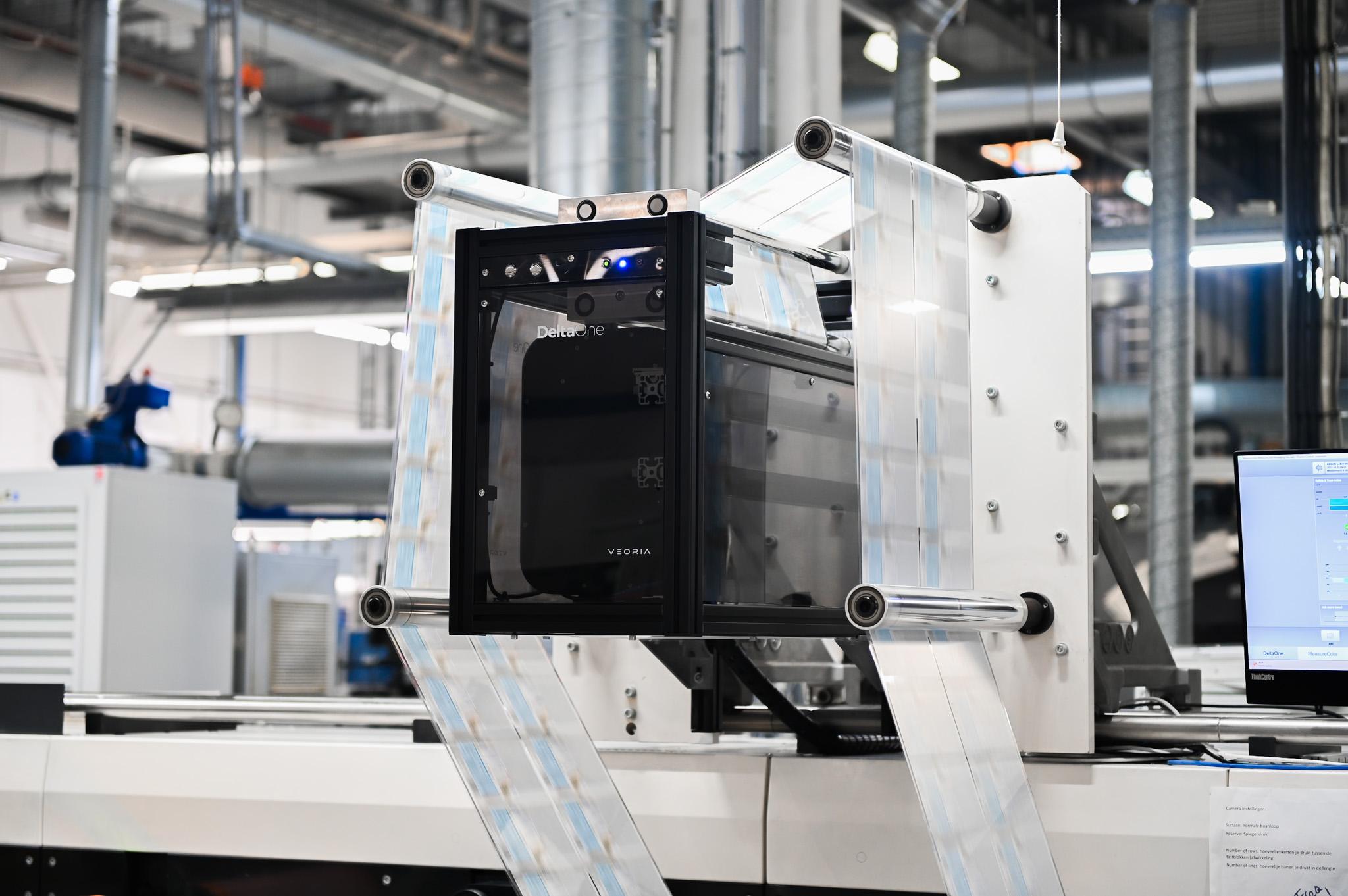
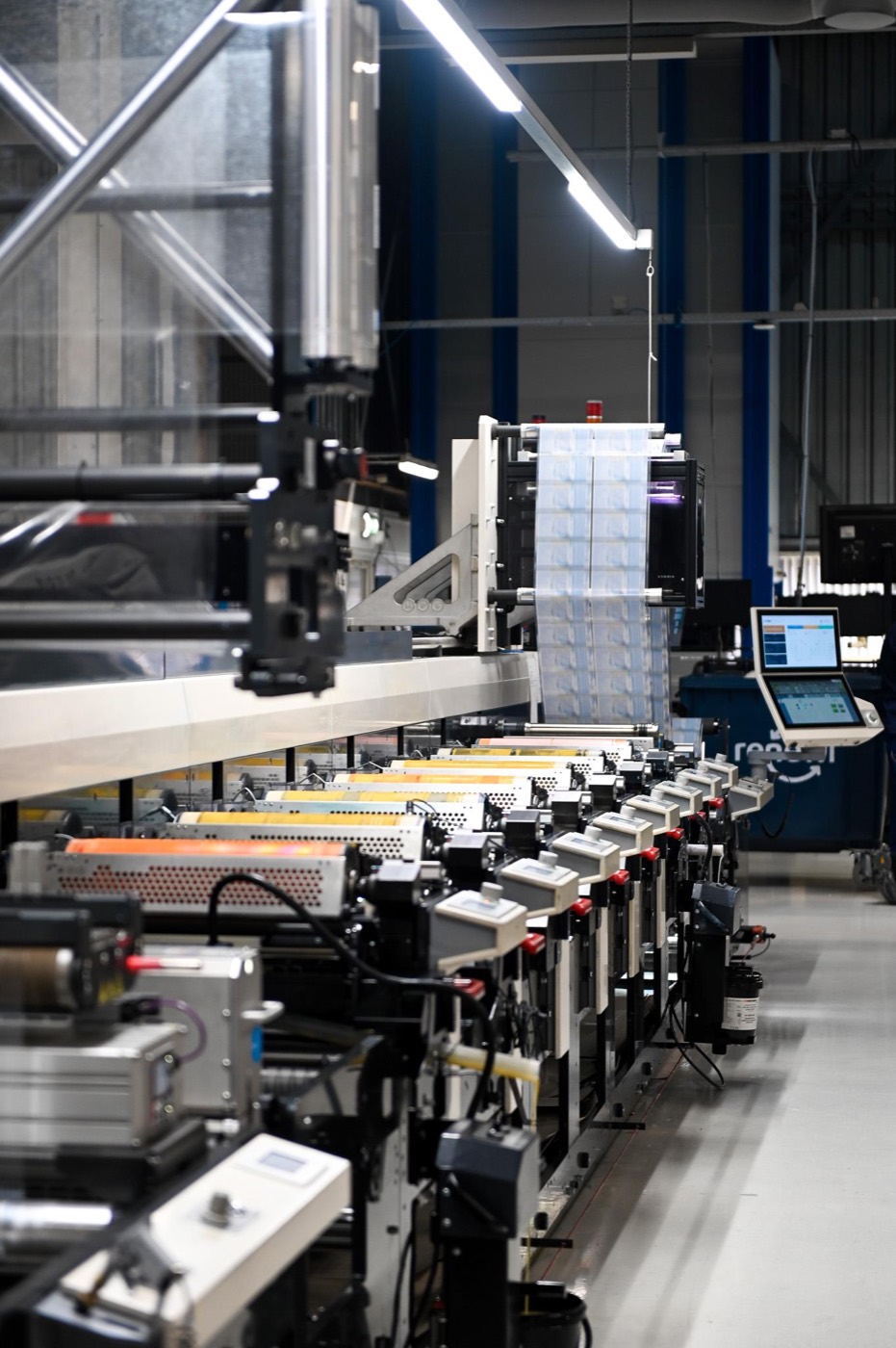
DeltaOne was built for jobs shaped like this. It reads every channel of a 7-color colorbar — patches down to 2 × 2 mm — at up to 500 m/min, one row per ink with the density correction to make, and dot gain tint by tint. Turned to portrait, the screen shows all seven channels at once. The product page shows the software on a running 7-color job.
If you are evaluating systems at LOUPE Americas this month, this piece pairs with our show-floor checklist. And if you want to see a fixed palette held on a real press, request a demonstration.