Five currents are converging on Chicago this September: AI that needs data, waste that regulators now count, ink chemistry in motion, a workforce in transition, and brand owners asking for proof. The LOUPE Americas 2026 program reads like a map of all five.
Color control runs underneath each of them. Every one of these trends either produces a demand for better color data or removes the people who used to manage color by eye. Here are the five, and what each one changes on a flexo press.
1. AI needs a signal, and most presses are not producing one
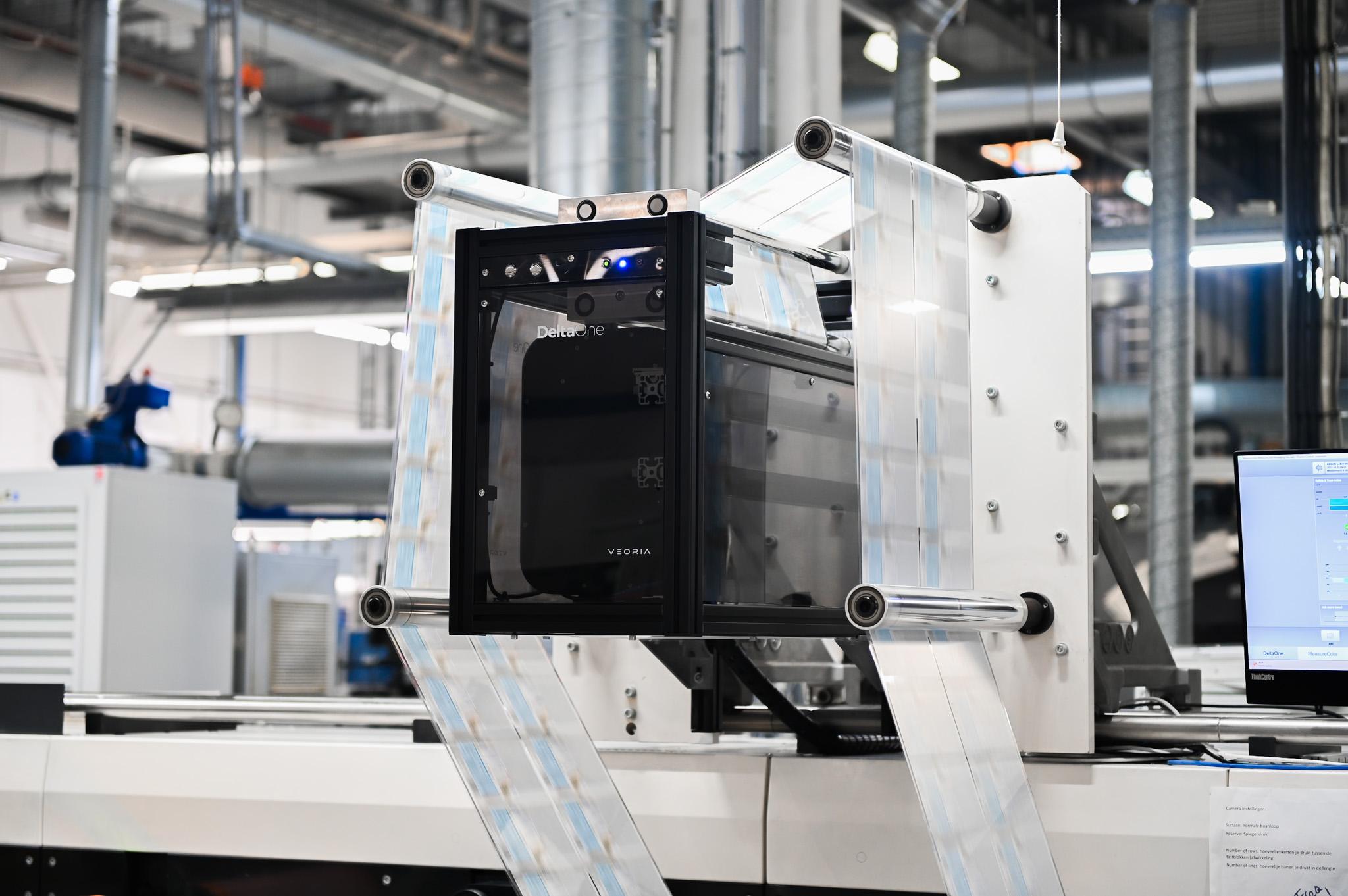
Sessions like "How AI is Rewiring Packaging Manufacturing" and "The 90% Problem: Unlocking AI Potential" address the same issue from two angles: most AI pilots in packaging plants stall. One reason is data. A machine learning model that predicts color drift needs a continuous, calibrated measurement of color on the running web. A handheld reading every 2,000 meters is not a signal; it is an anecdote.
What it changes: Inline spectral measurement moves from "quality tool" to "data infrastructure." Converters who instrument the press now have a dataset when the AI conversation gets serious in 2027.
2. EPR and PPWR turn waste into a reportable number
Extended producer responsibility programs are active in several US states. In the EU, Regulation (EU) 2025/40 on packaging and packaging waste applies from August 12, 2026, with obligations phased in over the following years. North American converters exporting to Europe, or supplying multinationals, will see these requirements flow down through brand owner supplier agreements.
The LOUPE program reflects this: "Collaborating Through EPR," "Landfill Avoidance Through Beneficial Reuse," "SGP Certification," "Future of Packaging Waste."
What it changes: Makeready waste stops being a cost line only the plant manager cares about. It becomes a number that customers ask for. Measuring color inline shortens makeready because the operator gets to tolerance faster, and it produces a log that documents the improvement. The VEORIA ROI calculator lets you estimate your own meters saved per job.
PS. Measuring waste is the color half of the PPWR story. For the other half — recyclability grades, Declarations of Conformity, EPR registrations across 27 member states — we built PPWR Connect, a compliance dashboard for printers, converters, brands and their suppliers.: import your SKUs, it computes your gaps and your deadlines.
3. Ink chemistry is changing faster than press crews can learn it
Recycle-ready inks (Siegwerk, Tuesday), UV-LED low-migration systems (Sun Chemical, Wednesday) and water-based transitions all shift press behavior: different dot gain, different drying, different color response to anilox and pressure changes. Each new ink system resets the crew's intuition.
Extended Color Gamut adds a shift of its own. A fixed CMYK plus orange, green and violet set replacing spot inks means fewer ink changes and shorter makeready — but a small drift in one process color now moves every converted spot color at once. ECG tightens the tolerance discussion; it never relaxes it.
What it changes: Measurement replaces memory. When the reference is a spectral target and the press reports ΔE continuously, a new ink system is a calibration, not a relearning.
4. The experienced operator is retiring, and the replacement has 6 months of experience
"Talent Landscape," "Building a Succession Plan," "Student Day," "Future Leaders Meetup": a quarter of the program is about people. The operator who could match a Pantone by eye across three shifts is leaving the industry. The person replacing them is capable, but they need the press to tell them what to adjust.
What it changes: Color control has to live in the system, not the person. Operator screens that say "cyan, minus 3%, unit 4" outperform dashboards that say "ΔE 2.4."
5. Brand owners want the data, not the promise
Mintel and Labels & Labeling open the show with the decade's packaging trends. From the brand owner side, the trend we see in every RFP is the same: proof. Color conformance reports per job, per roll, sometimes per label. A certificate of analysis for color, the way there is one for adhesive.
What it changes: Converters who can export a color conformance log from every job have a sales argument that a competitor with a handheld and a clipboard cannot match. Integration with color QA platforms (ChromaChecker, MeasureColor) is what makes that export routine.
What this means if you are walking the floor in Chicago
None of these trends requires you to buy a new press. All of them reward instrumenting the presses you have. When you visit press, ink and software booths at LOUPE Americas, ask each vendor how their product connects to color measurement data. The ones with a good answer are the ones building for 2027.
Ours is on the approach page: one measurement layer, under all five.