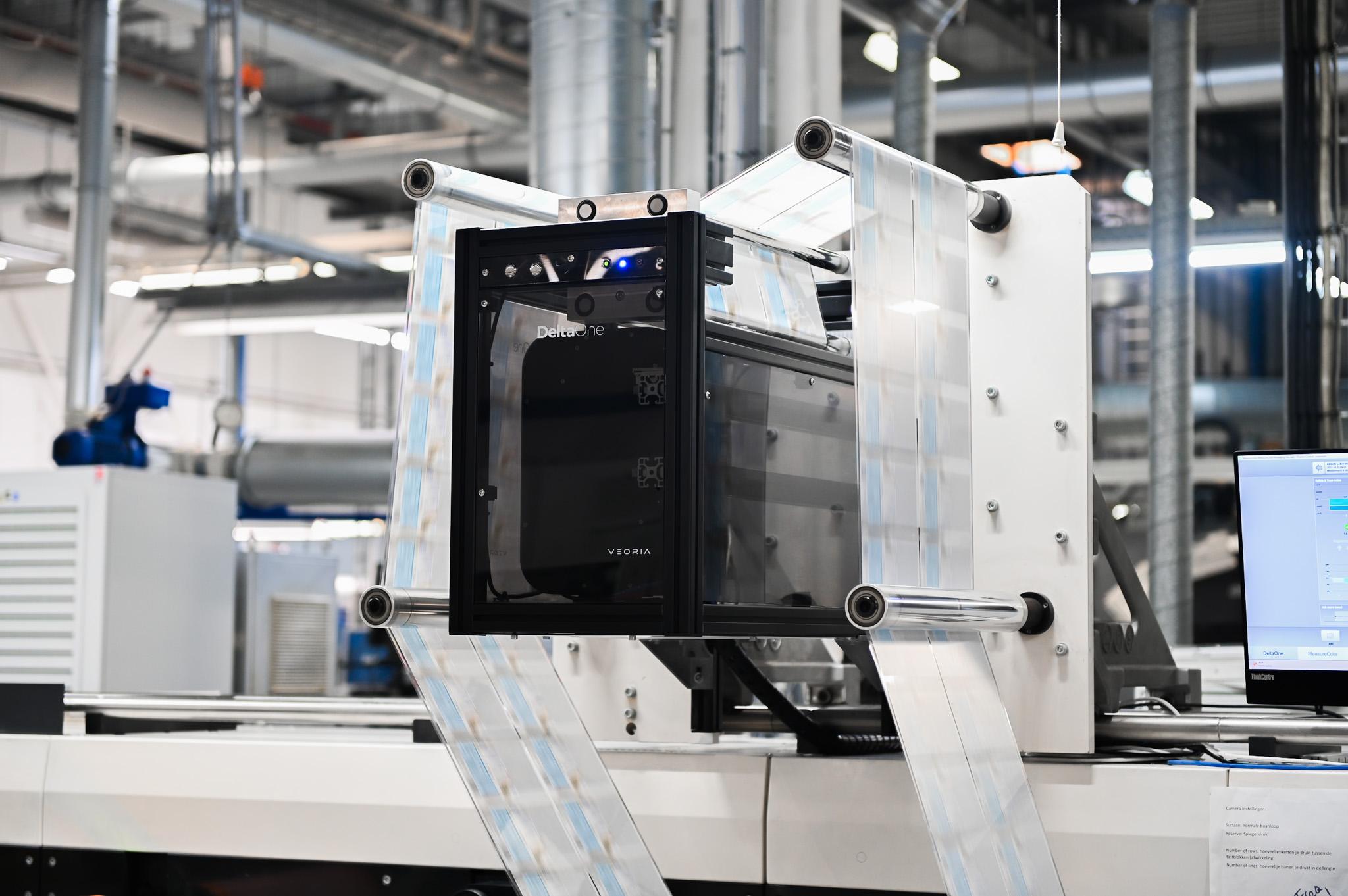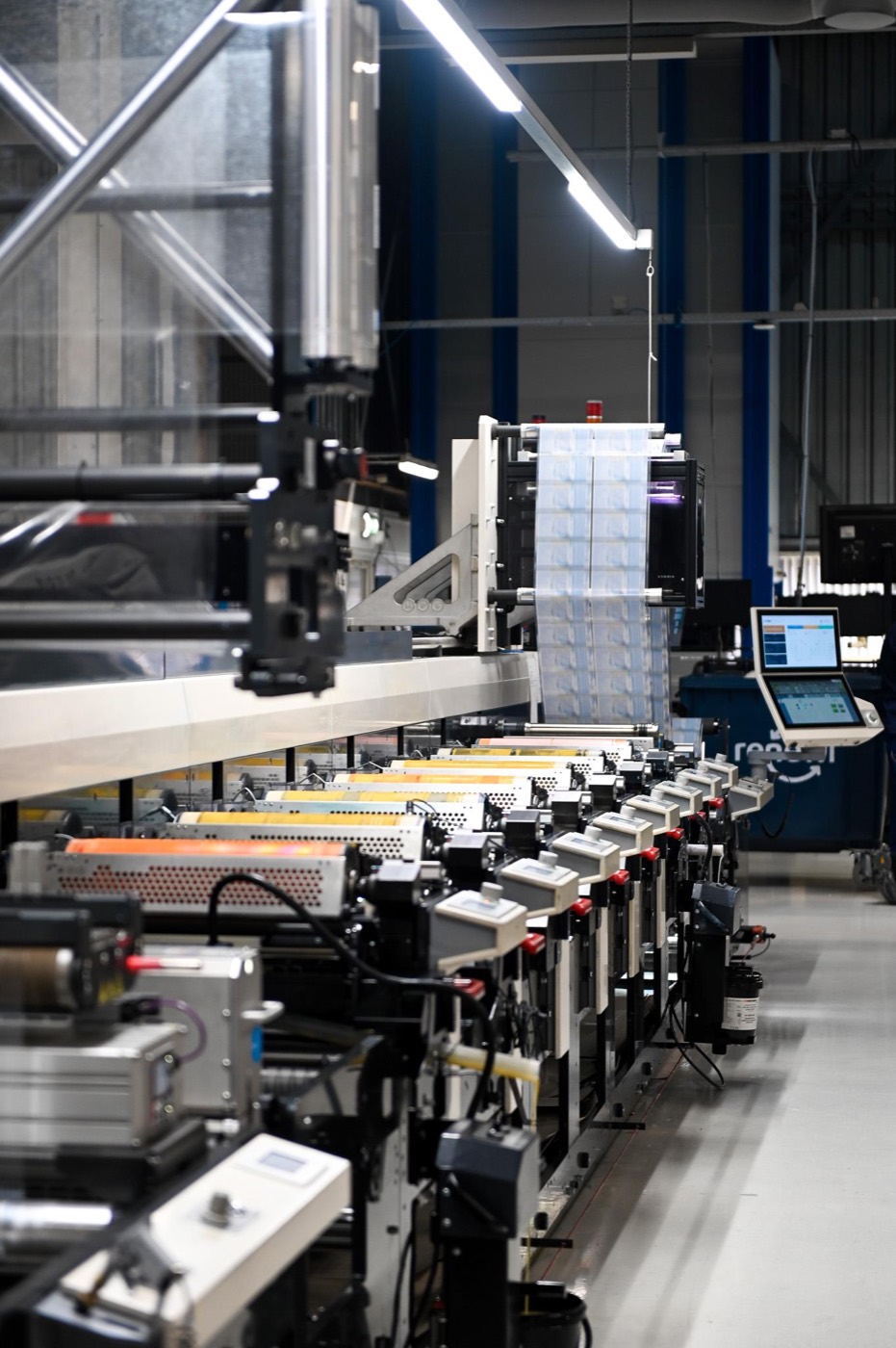
Trade show booths are designed to make every system look equivalent. A well-lit sample, a confident demo, a brochure with a ΔE number on it. The differences that matter on your press floor at 3 AM only surface when you ask specific questions and listen for specific answers.
Before the show we published the short version: five quick checks for any color measurement or inspection booth. This is the long one — the same evaluation taken to ten questions, with what a good answer sounds like for each. Print the list, or save it to your phone.
1. Does the system measure spectral data, or RGB?
Why it matters: ΔE against a brand standard requires spectral data converted to Lab under a defined illuminant and observer. An RGB camera can flag a shift; it cannot report a reliable ΔE.
A good answer: "Spectral, N bands, from X to Y nm." A vendor with a real spectral system knows the number without checking.
2. What is the repeatability, measured how?
Why it matters: Repeatability is the noise floor of the instrument. If it is 0.5 ΔE, you cannot control to a 1.0 ΔE tolerance with any margin.
A good answer: A number, plus the conditions: at production speed, on press, on a stated patch size. For reference, DeltaOne specifies 0.1 ΔE repeatability at up to 500 m/min; insist on the same precision from anyone.
3. What is the minimum colorbar patch size?
Why it matters: Every millimeter of colorbar is paid substrate. At small patch sizes, a full process-plus-spot colorbar fits in the trim of most label jobs; at 5 mm or more, you start losing usable web.
A good answer: A number in millimeters at your press speed. "It depends" is a warning sign.
4. What is the maximum press speed at full measurement accuracy?
Why it matters: Some systems degrade gracefully with speed: fewer samples, wider averaging, lower confidence. Ask whether the stated accuracy holds at your top speed or only at demo speed.
5. Which measurement conditions does it support?
Why it matters: ISO 13655 defines M0, M1, M2 and M3 measurement conditions. Brand owners increasingly specify M1 (D50 with UV content) for substrates with optical brighteners. If your inline system reports M0 and your handheld reports M1, the two will never agree and your operators will stop trusting both.
A good answer: The vendor names the conditions supported and explains how they correlate inline readings to your offline reference instrument.
6. How does it correlate with our handheld spectrophotometer?
Why it matters: The handheld remains the reference for customer approval. An inline system that disagrees with it by more than the combined repeatability of both instruments is not usable for control.
A good answer: A documented correlation procedure and typical inter-instrument agreement figures.
7. Where does the data go, and who owns it?
Why it matters: Measurement without connection to your QA and prepress software becomes another island. Ask about live integration with platforms such as ChromaChecker or MeasureColor, about export formats, and about whether data is stored locally, in the vendor's cloud, or both.
A good answer: Named integrations, a live connection (not a nightly CSV), and clear data ownership by the converter.
8. Can it retrofit on our existing presses?
Why it matters: Most converters at LOUPE are not replacing their fleet. A system that only ships as OEM equipment on a new press does not help the three presses you already own.
A good answer: Mounting dimensions, web width range, and whether the unit can be moved between presses.
9. What does the operator actually see?
Why it matters: A system that generates alerts nobody understands gets switched off within a month. Ask for the operator screen, not the QA manager's dashboard. Is it a pass/fail traffic light? A trend? Does it tell the operator which ink and which direction to adjust?
10. Can you show me a customer's before-and-after numbers?
Why it matters: Press stops avoided, meters of makeready waste, restarts shortened. If the vendor cannot name a customer and a figure, the ROI claim is theoretical. For reference, Eshuis BV, running DeltaOne, cut press stops by half and avoided 100 m restarts; the full case study is on our Insights page.
A note on the difference between inspection and color measurement
Many booths at LOUPE will show "100% inspection" systems. These are camera-based systems that compare every label to a golden image and catch defects: missing print, misregistration, text errors, barcode faults. They are essential, and they are not color measurement instruments. A converter needs both: inspection for defects, spectral measurement for color conformance. Ask each vendor which problem they solve, and be wary of anyone who claims both from a single RGB camera.
For our own instrument, the DeltaOne datasheet answers questions 1 through 8; for questions 9 and 10, request a demonstration — those two only ever have live answers.