US retailers are preparing their checkouts to scan 2D barcodes by the end of 2027, a transition the industry calls GS1 Sunrise 2027. Convenience stores are among those setting up for it, and for label converters it will show up the same way most retail changes do: as new artwork, new requirements and new questions from brand owners.
Here is what changes, and why print quality — including color — decides whether a 2D code actually scans.
What Sunrise 2027 is
An industry goal, not a law. Led by GS1 US with retailers and brands, the aim is for retail point-of-sale systems to read and process the product's GTIN from a 2D code — a GS1 DataMatrix or a QR code using GS1 Digital Link — by the end of 2027.
A transition, not a switch. The linear UPC is not disappearing overnight. During the transition, packs are expected to carry both the familiar barcode and a 2D code.
More data in one place. A 2D code can carry the GTIN together with information such as batch, expiry or a web address for product information. That is why brands are interested: one code for the checkout, the supply chain and the consumer's phone.
What changes on the label
A second code to place. Room for a 2D symbol and its quiet zone, on artwork that was already full.
Static or variable data. A code that carries only the GTIN and a web address can be printed from the plate like any other element. A code that carries batch or expiry data changes from run to run, which means variable-data printing on the line or downstream.
A grade, not just a scan. 2D codes are graded against ISO/IEC 15415, on a scale from A to F. Brand owners and retailers set a minimum grade, and a code that scans on one phone can still fail it.
Where color comes in
Two of the parameters that decide a 2D code's grade are set on press.
Contrast. A code is read from the difference in reflectance between its dark modules and the light background. That difference depends on the ink, its density and the substrate. When the ink film thins out during a run, contrast falls with it — and the code's grade can fall too.
Module size. Dot gain changes how large each printed module is compared to the design. Too much growth and modules start to merge; the code loses the geometry the reader depends on.
Neither of these shows up as a defect. Both show up as numbers: solid density and dot gain, the same measurements that keep the brand colors where they were approved.
Two jobs, two tools
Grading a 2D code is a job for a verifier or an inspection system able to grade codes. Keeping density and dot gain stable through the run is a job for color measurement. For how the two fit together on one line, see print inspection vs inline spectral color measurement.
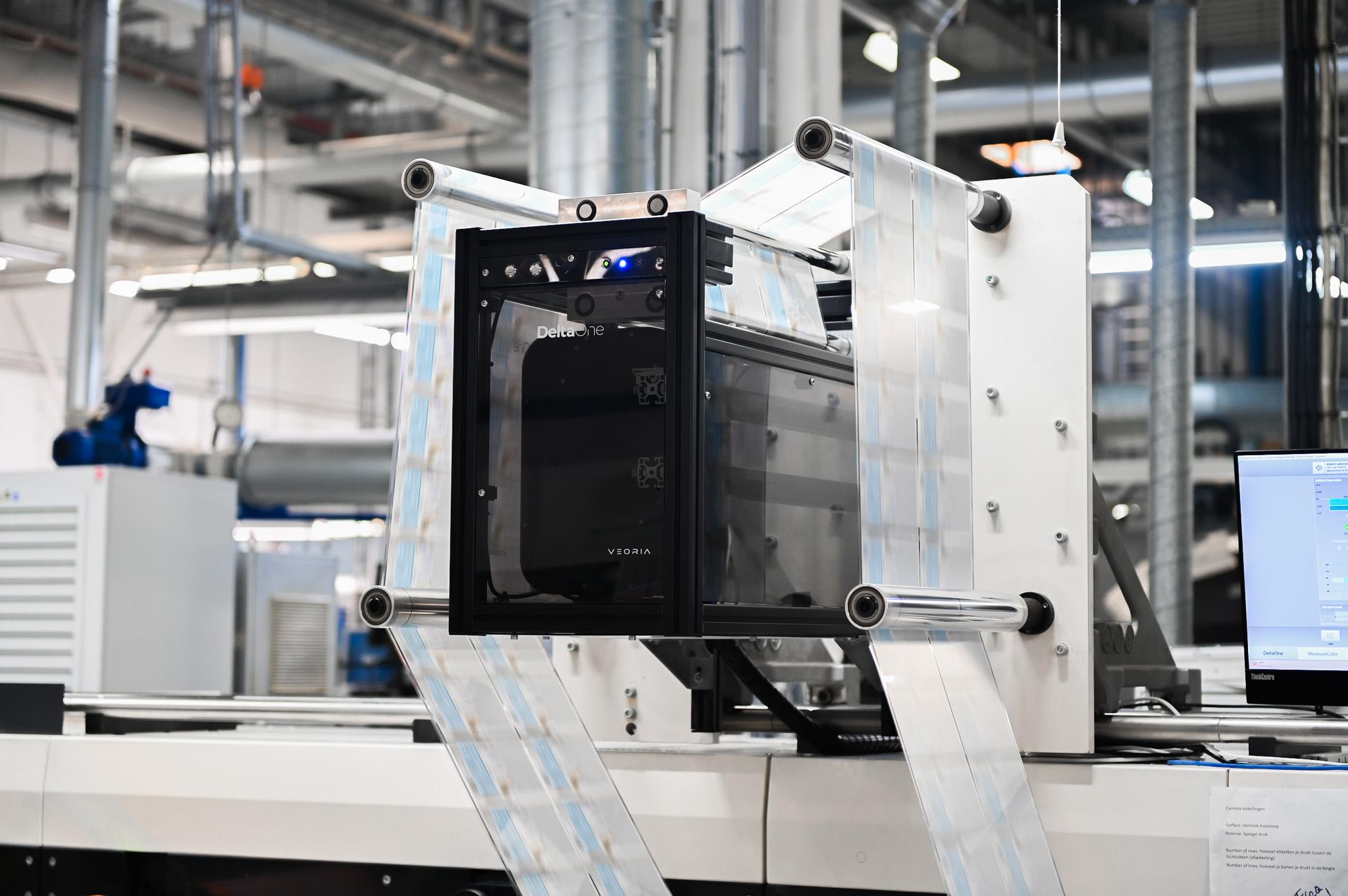
DeltaOne does not grade codes. It measures every ink on every revolution — ΔE, solid density and dot gain — so that the press conditions a 2D code depends on are the conditions the job was approved under.
What to do now
Ask your brand customers three questions. Are they adding 2D codes, and when? Which symbology and which data — static or variable? What minimum grade will they specify?
Check your process for small detail. Print a test form with 2D codes at the sizes your customers plan, and grade them. It will tell you quickly whether dot gain and density on your presses leave enough margin.
Plan your verification. Decide where codes will be graded — offline on samples, or inline on every label — before the first job with a 2D code arrives.
To see density and dot gain tracked live on a running press, request a demonstration.